tierra
May 31, 2026 — October 25, 2026
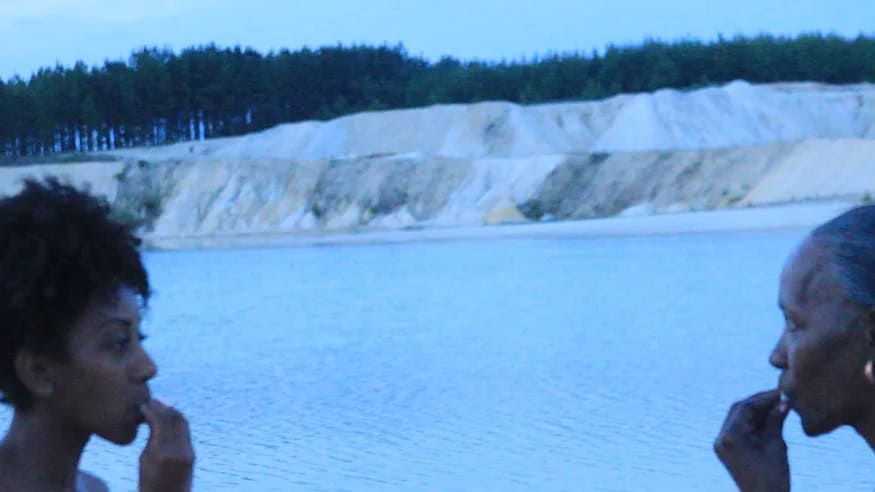
There is a quiet weight to the word tierra.
It settles slowly, like dust after movement, like clay in a riverbed.
It names what is beneath, what is held, what is returned to. tierra expands and contracts. It burrows under fingernails, lingers in the air, settles in memories. It is both earth and land, but it is also ground to stand on, dirt to be worked, homeland carried across distances, and sediment accumulated through time. It is material, archive, and an ancestor. Each meaning layered over and under the other.
Part of Craft Contemporary’s Clay Biennial series, tierra marks a reconsideration of the biennial’s conceptual and material parameters. This iteration expands its focus beyond ceramic and clay as a singular medium to encompass broader practices grounded in land and earth. Across the practices presented, earth-based materials appear not only as matter but as carriers of relation that are marked by touch, shaped by labor, and mended through care. These materials are approached as holders of cultural memory and as sites where knowledge is formed through making, tending, and embodied practice. Rather than centering medium alone, the exhibition attends to the ways artists work with and through earth, not only as a material, but as a relation.
tierra foregrounds the work of Latinx, Indigenous, and Black artists whose practices reflect emotional, familial, and cultural connections to land. Within these works, earth often appears as ancestor, relative, or teacher; a deep-time relationship shaped through kinship rather than ownership. Lineages emerge through matriarchal and ancestral histories, where making stewards knowledge across generations and geographies.
Here, the earth holds knowledge, it remembers what bodies have done to it, and what it has done to us in return. It is within this exchange that fractured relationships come into view. Landscapes carry the traces of colonial and capitalist extraction, of borders drawn and crossed, of bodies displaced by force or necessity. Within this terrain, humans are understood as geologic forces, embedded within the uneven temporalities of the Anthropocene. Labor, violence, and exhaustion alter ecologies and environments, and we, like the land, carry the trace of these histories.
Yet tierra does not subside in rupture alone. Throughout the exhibition are practices of care, stewardship, and reparation, understood not as resolution but as sustained practice. Restoration here is physical and spiritual, ecological, and communal. It is found in kinship networks, in Indigenous frameworks of responsibility, and in gestures that insist on continuity despite damage. These practices acknowledge the material as something living, as a relative or ancestor, as a body that holds grief and resilience.
The exhibition unfolds through the many definitions of the word tierra, definitions that overlap and collapse into one another. Emotional memory is inseparable from environmental impact; ancestral knowledge challenges colonial histories; care emerges alongside critique. The exhibition invites viewers to move through these layers, recognizing land not only as ground beneath our bodies, but as a living record of relation, shaped, held, carried, and returned.
In the end, we become the very earth we stood on.
tierra is created in collaboration with the Stanlee and Gerald Rubin Center for the Visual Arts. @el.rubincenter
This exhibition is supported, in part, by The Pasadena Art Alliance.
The [Untold] Story of Craft
Beginning in June 2025, Craft Contemporary will present a series of exhibitions interpreting the varied interactions between craft and the natural elements: air, water, earth, and fire. The exhibitions will highlight sustainability, accessibility, and connect visitors to the universal rhythms of the Earth. Significantly, these exhibitions will tell a new story of Craft in a contemporary world as we work together to heal global wounds through creativity and making.